As the Milky Way sets, light from nearby villages and mining towns turns the stream of clouds overhead into a rippling river of fool’s gold. On this night in October of 2013, during the first season of observations of the Dark Energy Survey, we pumped caffeine into our bodies to stay awake, to keep ready for when the conditions would change. Every field we can observe, every galaxy we can capture will make a contribution to the greater measurement of their vast patterns – patterns distorted (or created) by a dark energy.
One hundred years ago, an American astronomer by the name of Vesto Slipher became the first to measure streams of galaxies in our local neighborhood. Slipher used the 24-inch telescope at Lowell Observatory to measure velocities of spiral nebulae (i.e., galaxies), through a method known as “spectroscopy.” Most of the galaxies that Slipher measured are receding from the Milky Way, rather than moving toward it – the first indication of cosmic expansion.
This result laid the groundwork for the definitive discovery of the expanding universe. Unfortunately, Edwin Hubble of Mount Wilson is most often accredited with this finding. Hubble measured distances via Cepheid Variables to distant nebulae and then correlated them with Slipher’s velocity (redshift) data to create the famous distance-velocity plot for his 1929 paper.
Hubble provided no citation of Slipher’s work.
Slipher is the first to measure Doppler Shifts (velocities) of galaxies, to show that spiral galaxies rotate, and to detect that collections of stars and dust are actually nebulae outside our own Milky Way.
Let us remember Vesto Slipher – among modern cosmology’s most influential unsung heroes.
After a great journey, a long-hidden member of our solar system has returned. Not since the 9th century, when Charlemagne ruled as Emperor of the Holy Roman Empire and Chinese culture flourished under the Tang Dynasty, has this small icy world re-entered the realm of the outer planets.
This distant wanderer is among first of its kind discovered with data from the Dark Energy Survey (DES). Now officially known as 2013 TV158, it first came into view on October 14, 2013, and has been observed several dozen more times over the following 10 months as it slowly traces the cosmic path laid out for it by Newton’s law of gravitation. We see this small object move in the animation to the left, comprised of a pair of images taken two hours apart in August, 2014.
It takes almost 1200 years for 2013 TV158 to orbit the sun, and it is probably a few hundred kilometers across – about the length of the Grand Canyon.
In eight more years, it will make its closest approach to the sun – still a billion kilometers beyond Neptune. At this distance, the sun would shine with less than a tenth of a percent of its brightness here on earth, and would appear no larger than a dime seen from a hundred feet away.
That’s what high noon looks like on 2013 TV158.
Then it will begin its six-century outbound journey, slowly fading from the view of even the most powerful telescopes, eventually reaching a distance of nearly 30 billion kilometers before pirouetting toward home again sometime in the 27th century.
This object is just one of countless tiny worlds that inhabit the frozen outer region of the solar system called the Kuiper Belt, an expanse 20 times as wide and many times more massive than the asteroid belt between Mars and Jupiter. The dwarf planet Pluto also calls the Kuiper Belt its home. The orbits of Jupiter, Pluto and 2013 TV158 around the sun can be seen in the image to the lower right.
Scientists believe that these Kuiper Belt Objects, or KBOs, are relics from the formation of the solar system, cosmic leftovers that never merged into one of the larger planets. By studying them, we can gain a better understanding of the processes that gave birth to the solar system 4.5 billion years ago.
Because they are so distant and faint, KBOs are extremely difficult to detect. The first KBO, Pluto, was discovered in 1930. Sixty-two years would pass before astronomers found the next one. Astronomers have identified well over half a million objects in the main asteroid belt between Mars and Jupiter. To date, we know of only about 1500 KBOs.
DES is designed to peer far beyond our galaxy, to find millions of galaxies and thousands of supernovae, but it can also do much more. DES records images of ten specific patches of the sky each week between August and February. These images are a perfect hunting ground for KBOs, which move slowly enough that they can stay in the same field of view for weeks or even months. This allows us to look for objects that appear in different places on different nights, and eventually track the orbit over many nights of observations.
So far we’ve searched less than one percent of the DES survey area for new KBOs. Who knows what other distant new worlds will wander into view?
When is the last time you watched the sky revolve around us?
Earth rotates on its axis at 1,000 miles per hour (1600 kilometers per hour). At the same time, it flies around the sun at 67,000 m/h (110,000 km/h). And the Sun, with all its planets and rocks and dust in tow, makes its way around the center of the Galaxy, our Milky Way, at 520,000 m/h (830,000 km/h). And then, the Milky Way itself is hurtling toward the nearby Andromeda galaxy at 250,000 m/h (400,000 km/h).
The fastest space craft (and fastest man-made object in history), Juno, will slingshot around Earth on its way to Jupiter, eventually reaching a speed of 165,000 m/h. The NASA space shuttle reaches speeds of 17,000 m/h (27,000 km/h).
The average human walking speed is 3.1 m/h (5.0 km/h).
Though we sit in this coordinated maelstrom, we can still understand all of space and time on the largest scales. But, to do so, we must consider it statistically, on the whole, at great breadth and as a collection – not merely the sum of disconnected parts or separate events.
All across the universe, there are supernovae – exploding stars that blink in a cataclysmic, cosmically infinitesimal moment. Quasars are small regions that surround the supermassive black holes at the centers of galaxies that flash on and off on the timescales of hours to months. Each galaxy in the universe is creating some dimple in space-time due to its mass. Imagine a vast expanse of sand dunes: all light passing by these galaxies must traverse through it, resulting in distorted images by the time they get to us.
These are just some of the events that go on constantly around us, without regard for our existence, as we spin round and round, imagining a static quilt of stars turning about us. And they are just some of the celestial targets that will tell us more about how fast the universe is expanding.
To better understand these events, and the acceleration of spacetime, we wait for the targets to be at a place in the sky when we can see them – when the sun is down and this part of Earth is pointed in their direction. Our targets come from a large swath of sky, one-eighth of the celestial sphere. And across this expanse, we will obtain a uniform sample of targets. The uniformity – homogeneity or constancy – is crucial: we must observe all galaxies brighter than a certain amount, and within a certain distance to have a clean, uniform sample. Otherwise, variations in that information could be misconstrued, or at best they could muddy our measurement of dark energy.
Building the collection starts with amassing a set of deep images of the sky: these are but snapshots of long-gone eons, and they are the first step in our process of discovery. From the images, we distill vast catalogs of celestial bodies – galaxies, stars, motes and seas of hot gas and dust – an accounting of what the universe has so far created. This catalog can be further distilled when studied as a whole. The final concentrate is a small set of numbers that summarizes the fate of our universe: a measurement of the strength of dark energy.
Our spaceship Earth is a pebble in the swirling cosmic sea around us. We watch it as if we are separate, sometimes forgetting we come from it. As we look up from within our snowglobe on a mountaintop in the Chilean Andes, it becomes easier to remember that we are a conduit between the finite and the infinite.
As the Galaxy sets behind the Blanco telescope, our home away from home, we are reminded of where we really are. Earth resides in a mere village of planets, one of many in a city of stars – our Milky Way galaxy – which, as these detectives see it, is our true home.
But it is the distant stars and galaxies, just like those we call home, that betray patterns in our cosmos.
We operate in the dark of night to find as many as we can, as carefully as we can. We track locations, movements, interactions, explosions and lifetimes of millions of individuals. Only these clues in aggregate (for the most part), will lead us down a starlit path to an understanding of our universe’s greatest tug of war: that which is between the pull of gravity and the accelerating expansion of dark energy.
The detectives have gone back to work for Season 2 of observing and combing the logs of photons as they stream into the trap we’ve set, the Dark Energy Camera (DECam). In the coming months, we’re turning these streams into nuggets of knowledge, the first puzzle pieces to be revealed by the Dark Energy Survey (@theDESurvey).
And ultimately this knowledge brings us back home, to understanding our place in the cosmos.
I’m here now at the Blanco, writing this as we prepare for our third night of observations and tracking in Season 2 of DES, with bags under our eyes, coffee mugs in hand, watching the fires in the sky.
Det. B. Nord (@briandnord)
If you run into us where the electrons roam (FB, Twitter, Reddit, etc.), don’t be afraid of the dark – get in touch. We’ll report every two weeks (and occasionally more), and we’ll have more detectives and more ways to tell the stories.


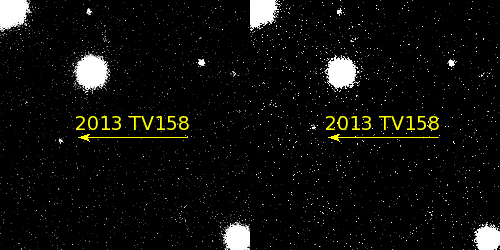 After a great journey, a long-hidden member of our solar system has returned. Not since the 9th century, when Charlemagne ruled as Emperor of the Holy Roman Empire and Chinese culture flourished under the Tang Dynasty, has this small icy world re-entered the realm of the outer planets.
 Because they are so distant and faint, KBOs are extremely difficult to detect. The first KBO, Pluto, was discovered in 1930. Sixty-two years would pass before astronomers found the next one. Astronomers have identified well over half a million objects in the main asteroid belt between Mars and Jupiter. To date, we know of only about 1500 KBOs.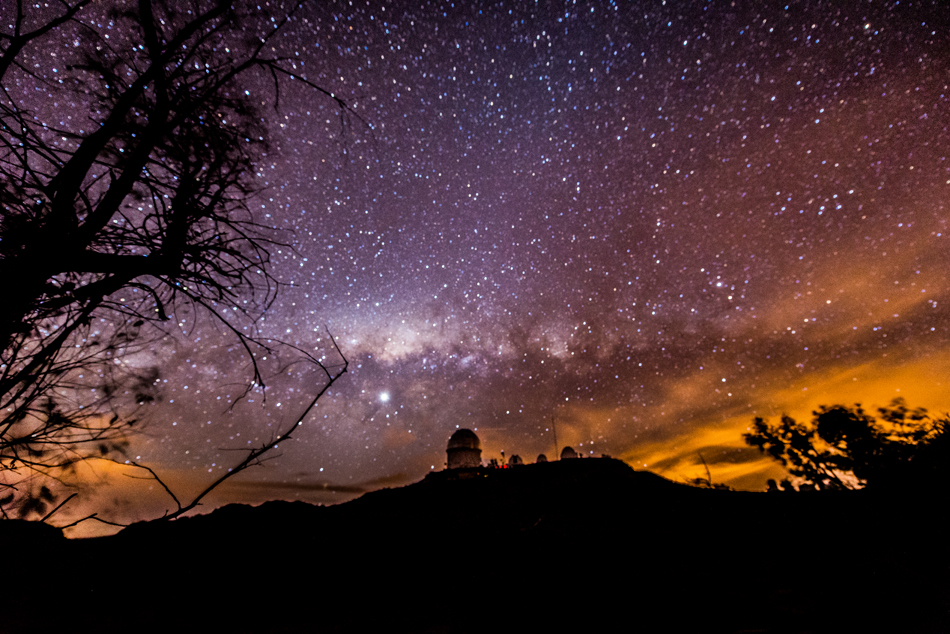
 Dark Energy Detectives