A project of the Dark Energy Survey collaboration

Latest

Image

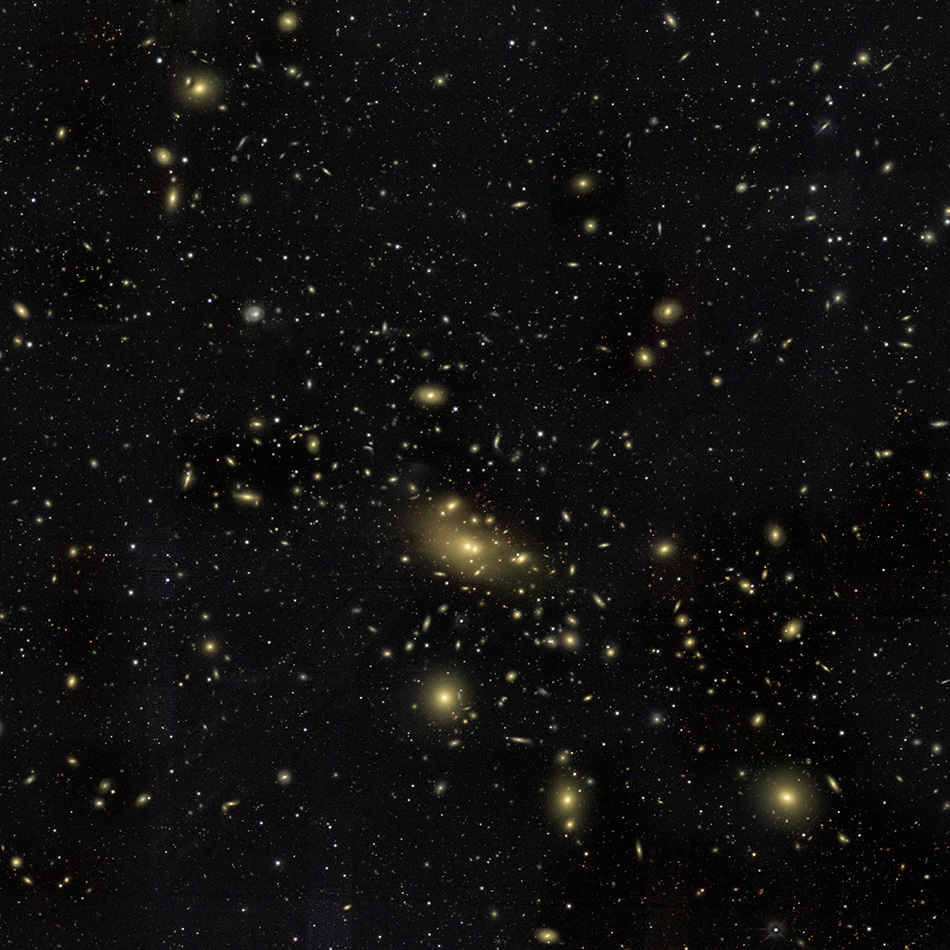
Our dark, tangled web: Where’s Waldo?

DES0428-33_6122_20141105_43

Cosmic structures woven together during the tug of war between gravity and dark energy present a multi-faceted challenge for scientists, as we seek to untangle each galaxy from the luminous cacophony of filaments and clusters across large swaths of space and time.

We love staring at the beautiful images taken by the Dark Energy Camera (DECam) at the Blanco telescope. The image above shows a cluster of galaxies laid on a backdrop of even more distant galaxies. To investigate the mysteries of the accelerating expansion, Dark Energy Survey (DES) scientists need to do a bit more – we need to develop a comprehensive census of the content across the universe: how many stars and galaxies are there in a given swatch of space-time fabric?

A critical step comes in creating a high-fidelity and detailed list of the observed celestial objects: these are called “catalogs” by astrophysicists and astronomers. The most common pieces of information are the position and brightness: this is the minimum information necessary to know where a galaxy resides in spacetime. 

With our hard-working scientists in the data management team and the powerful computers at National Center for Supercomputing Applications (NCSA), DES has developed new algorithms and pipelines for efficiently sifting the objects out of our images. We start with raw images straight from DECam, and then we refine them to remove artifacts, like satellite trails, cosmic rays and faulty pixels. From these “reduced” images, we must then find and characterize discrete objects, like galaxies and stars – cut the wheat from the chaff.

However, there is a limit to what we can do. For example, a very far-away object may appear extremely small and faint – so faint that it will look like a piece of the sky and get missed during the cataloging procedure. In some cases, it is not possible to tell the difference between a faint object and a noisy patch of sky. In addition, not every astronomical object is “willing” to be cataloged: it can be disguised as a part of another object. For example, near the center of today’s image,  there is a very large, bright galaxy with many smaller neighbors. Discerning all the objects here is similar to the difficulty one might have in noticing a flea in a picture of an elephant.

Objects also tend to hide from the computers when a piece of the sky is full of them: spotting a small object becomes as difficult as finding Waldo (Wally) on a crowded beach!

DES takes more detailed images than previous projects, like the Sloan Digital Sky Survey (SDSS). Thus, we are more pestered by the “hiding” objects problem. We see a more tangled web. As one solution, a group of DES scientists have employed an image restoration algorithm, derived from work by computer vision scientists. This algorithm successfully eliminates the impact of close neighbors when cataloging the “hiding” objects. Upon application to DES images, they have been able to find many “Waldos,” so we can add them to DES catalogs.

For more detailed description of the method, you can find a preprint of the paper here: http://arxiv.org/abs/1409.2885.

Det.’s Yuanyuan Zhang and B. Nord

Image: Det.’s Marty Murphy and Reidar Hahn
Image

In the air tonight


Sometimes, you can feel it coming in the air of the night.

Weather is fickle, but when a night of observing begins, we usually know how it will go. The first part of this season was often rainy and gray. The last several weeks, however, have allowed for new records in precision the precision of DECam data.

On Nov 11 and Nov 18, 2014, the Dark Energy Survey took exquisite data of all of our supernova fields – the regions of sky selected specifically to look for exploding stars. It was clearer than anything we’d seen previously. The video above is from a night early in this season, when the weather was also extremely good (but only for a few days). It is a view, from inside the dome, of DECam and the Blanco Telescope scanning the sky over the course of one night in August, 2014.

After a few nights of clouds or rain, it usually takes another night or two for the atmospheric turbulence to die down. This turbulence deflects light as it comes through the layers of Earth’s atmosphere, effectively blurring an image. But when this turmoil is no longer there, the conditions can be pristine.

Sometimes, you can feel it coming in the air of the night. It’s the final moment for so much starlight.

We are here to see what it did, see it with DECam’s 570 million eyes. DECam’s been waiting for this moment all of its life. Now we know where you’ve been, traversing the dark night skies.

The light of distant galaxies and stars has been waiting for this moment all that time.

Now forever, we remember where the light has been, how could we forget. When our detectors capture it, it’s the first time, the last time, we’ve ever met. We know the reason you kept your silence up. When it was cloudy, how could we know. When it’s clear, the signal still grows, the universe no longer a stranger to you and me.

Sometimes, you can feel it in the air of the night.


Det. B. Nord

[Hat tip to Phil Collins.]

Video

巡天遥看一千河

地球相对于天空来说,约每24小时自转一周。地球上的我们也因此做到了“巡天”的旋转木马上。

每到傍晚,离我们最近的恒星,太阳,就会撤走遮天幕地的光芒。呈现给我们的将是一闪一闪宛如跳舞般的星光——那些古老遥远的星系和星星遍布了整个夜空。傍晚之后的几个小时给予我们机会细致观察笼罩着地球的点点星光,直到天色微曦,我们再次沐浴到阳光下。白天的时候,满天星斗依然存在,但强烈的阳光让我们几无可能观察到它们。一直到夕阳西下,那些跳舞般闪亮的星系和星星准时回到夜幕这张大舞台上,星空再次出现。

我们的整个太阳系都是银河星系的一部分。银河系呈盘状,其中的星星和气体物质又组成了银心和旋臂。我们的地球作为附属于太阳的一个淡蓝色小点,住在银河系的郊区,银盘的二分之一处。当地球日复一日的自转时,银河系也在缓慢的旋转,但银河系的旋转周期要比地球长的多。

在天空日复一日,夜复一夜的旋转中,银河系的平面也和其他星系、星星一起一遍遍经过我们上方的天空。当我们从伸手不见五指的帕穹山(Cerro Pachon)山顶向天空望去的时候,我们可以看到银河系的平面,看到银河系中心所在的方向。

在本页的视频中,相机经南由东向西移动,整晚每隔三十秒进行一次拍摄。地球的自转轴经过南极点,所以我们可以看到天空绕着向南的方向旋转:银河系的一边先落下,然后在这个十月凌晨一点的时候,另一边开始升起。

晚上好,欢迎和我们一起,“巡天”遥看一千河。

作者:暗能量侦探 B · 诺德 (B. Nord)

视频制作:暗能量侦探 · 诺德 (B. Nord)

翻译:暗能量侦探 张Y Y. Zhang

翻译编辑:暗能量侦探 李T T. Li

备注:

  1. 本博文引用的视频设制于帕穹山。其时,作者正在使用双子南座望远镜(坐落于帕穹山,Cerro Pachon)为暗能量巡天所发现的伴有强引力透镜现象的星系团进行后续观测,并非用布兰科望远镜(托洛洛山,Cerro Tololo)进行暗能量巡天项目的直接观测。 帕穹山和 托洛洛山的地理位置极其接近。
  2. 翻译的博文标题取自毛泽东《送瘟神》。
Video

As the sky turns: the fall and rise of the Milky Way


We are swept up in a cosmic merry-go-round.

Earth spins relative to the sky – about one revolution every 24 hours.

After twilight, our nearest star, the Sun removes its warm blanket of light, revealing the dancing lights overhead: collections of aeons-old galaxies and constellations of distant stars fill the night sky. For some precious hours, we have exquisite access to these pinpricks and smudges of light that have always swirled overhead – until we bask again in the Sun’s rays. During the day, all blinking tapestry is still above us, but the Sun washes out any hope of seeing it. Again, after dusk, familiar patterns fill the sky, as the dancers return like clockwork to their positions on the celestial stage.

Our entire solar system resides in a galaxy, the Milky Way. The Galaxy’s structure includes spiral arms and a disk of stars and gas: our pale blue dot, tethered to the Sun, is nestled in the suburbs, halfway to the edge of the Galactic disk. As we turn from day to night to day, the Galaxy itself also spins (over much longer periods than Earth’s day).

During the course of our daily/nightly sweep of the heavens, just as the stars and galaxies move across our sky, so does the disk of Milky Way. When we look up from the dark mountain tops of Cerro Pachon, we look into the plane of the Milky Way, into the heart of our Galaxy.

In the video above, the camera rotates from East to West through South – taking a picture every 30 seconds over the course of the night. Earth’s axis goes through the South pole, so we see the sky spin about that point: one side of the Milky Way sets, and by 1am on this October night, another side begins to rise.

Good night, and keep looking up,

Det. B. Nord


Image

A traves del mundo, observando toda la noche

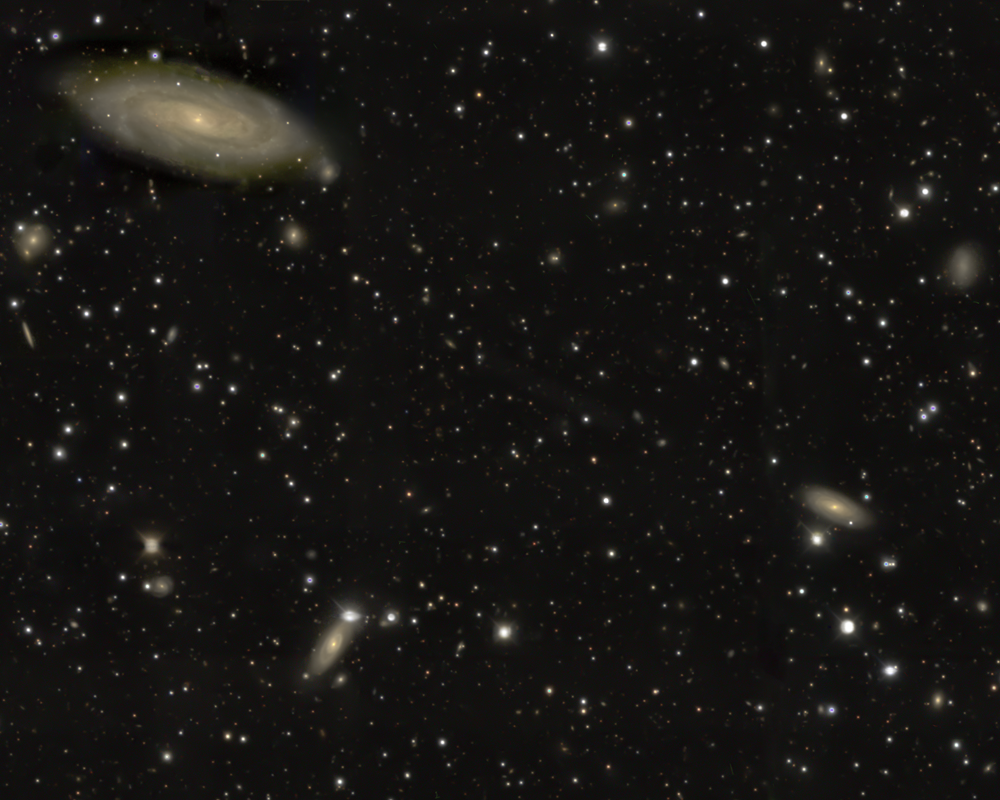
DES2018-5248_RGB.Neb.crop.edit2.3.1000-px

Durante la pasada semana, los detectives del Dark Energy Survey (DES) provenientes de cuatro continentes se han reunido para sacar a la luz más pruebas de cómo el tejido del espacio-tiempo se está estirando y evolucionando.

Más de 100 detectives se reunieron en Sussex, Inglaterra, para discutir el estado actual y el futuro del proyecto que se lleva a cabo en el telescopio Blanco, ubicado en Cerro Tololo en Chile. En esta reunión semestral de la colaboración (que se celebra en una sede distinta cada vez), trabajamos en la creación de estrategias de análisis para los diversos métodos de estudio de la evolución del espacio-tiempo y la energía oscura. Mientras escribo estas líneas, los primeros resultados se están preparando para su publicación.

Mientras, en Cerro Tololo, un equipo de observadores opera la Cámara de Energía Oscura (DECam) en el telescopio Blanco, a medida que progresamos en la segunda temporada de observación del muestreo. Cada una de estas temporadas va de agosto a febrero, coincidiendo con el verano chileno.

El Telescopio Anglo-Australiano en el Observatorio de Siding Spring en Australia es la sede de OzDES: un proyecto a largo plazo para la obtención de medidas de distancia muy precisas de los objetos descubiertos por DES, tales como cúmulos de galaxias y supernovas. Estas medidas “de seguimiento” constituyen pruebas muy importantes para dilucidar la naturaleza de la energía oscura .

Y en Cerro Pachón, justo al este de Cerro Tololo, otro equipo compuesto por dos agentes comenzó a buscar evidencias de zonas del espacio con una gran curvatura en el cosmos distante, utilizando el Telescopio Gemini Sur (@GeminiObs). Pasamos seis noches trabajando en la medida de distancias muy precisas a sistemas con las llamadas “lentes gravitacionales fuertes”. Estos sistemas están constituidos por galaxias y grupos de galaxias que son lo suficientemente masivos como para distorsionar significativamente el tejido del espacio-tiempo. Espacio y tiempo se deforman tanto, que los rayos de luz que proviene de los objetos celestes – como galaxias y cuásares – que se encuentran detrás de estas galaxias masivas, se curvan significativamente a su paso por estos sistemas. Las imágenes resultantes en DECam se estiran o incluso multiplican – al igual que en una lente óptica. En futuros informes ampliaremos los detalles sobre este fenómeno.

Al mismo tiempo, las supercomputadoras del Centro Nacional para Aplicaciones de Supercomputación estadounidense (NCSA) procesan los datos de DECam cada noche, convirtiendo las imágenes en bruto en datos “refinados” – listos para ser analizados por los equipos científicos .

La imagen de arriba no muestra ninguna lente gravitacional fuerte obvia, pero constituye un ejemplo de la calidad de la “evidencia” que genera DES para sus detectives todas las noches.

Abajo os incluimos las posiciones de algunas de las galaxias que véis arriba. ¿Qué información podéis encontrar acerca de ellas? Existen varias herramientas electrónicas “forenses” que os pueden ayudar en vuestra investigación (por ejemplo,  http://ned.ipac.caltech.edu/forms/nearposn.html , tened cuidado de introducir las coordenadas en el formato correcto, como se muestra más abajo). Podéis tuitear vuestros hallazgos en @darkenergdetec, y así comparar nuestras notas.

RA: 304.3226d,    Dec: -52.7966d

RA: 304.2665d,    Dec: -52.6728d

RA: 304.0723d,     Dec: -52.7044d


Buenas noches, y no dejéis de mirar al cielo.


Det B. Nord

Imagen: Det M. Murphy

Traducción: Nacho Sevilla Noarbe